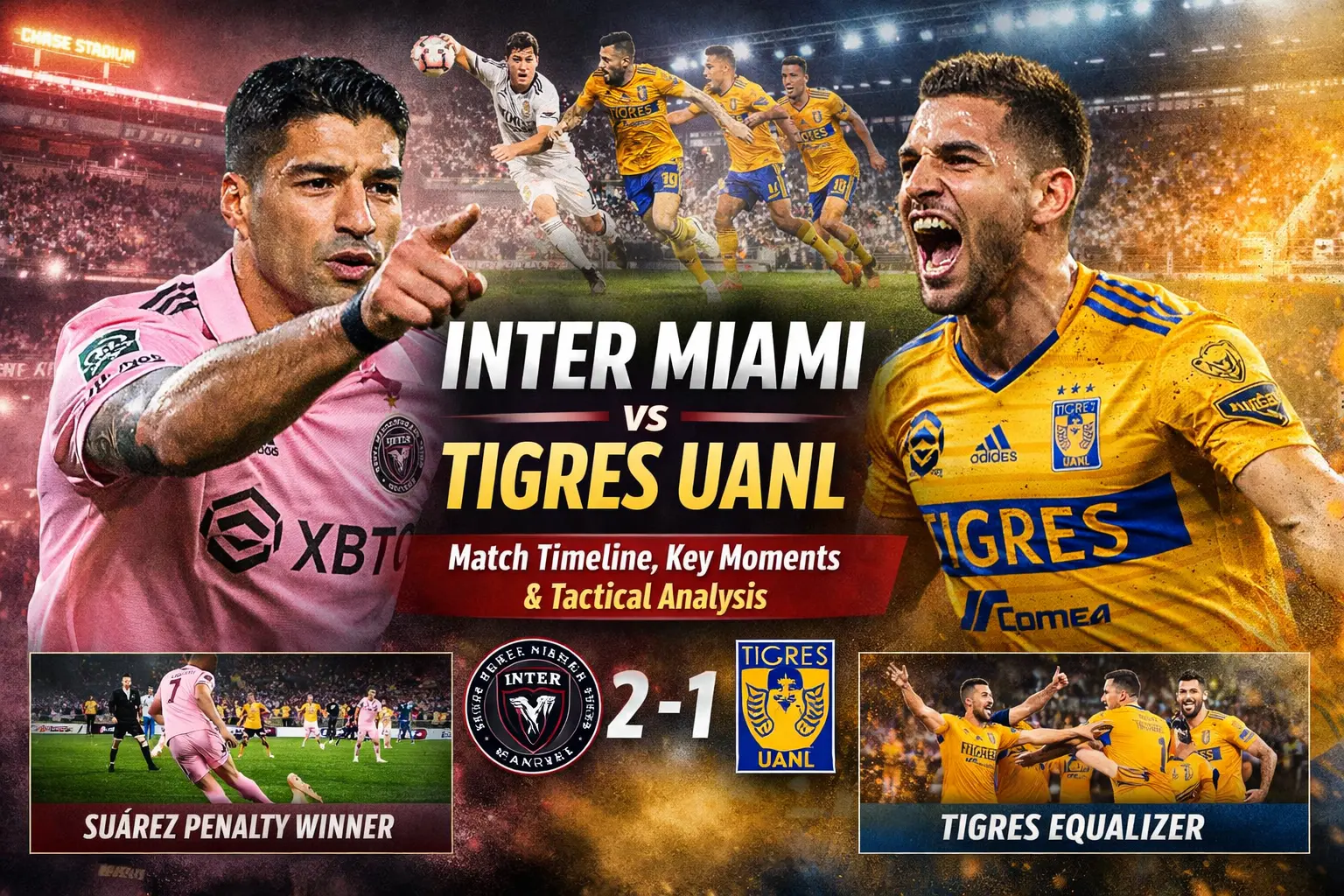
Inter Miami vs Tigres UANL: Match Timeline, Key Moments & Tactical Deep Dive
When Inter Miami CF faced Tigres UANL in the Leagues Cup, it wasn’t just another cross-league fixture. It was a tactical chess match between two different footballing identities: MLS efficiency versus Liga MX possession control.
Played under the lights at Chase Stadium, the match delivered drama, momentum swings, and decisive moments that ultimately shaped the outcome. Below is a complete breakdown — timeline, key turning points, tactical analysis, and what it all meant.
Quick Match Snapshot
- Final Score: Inter Miami 2–1 Tigres UANL
- Possession: Tigres controlled the ball for most of the match
- Game Theme: Efficiency vs Control
- Decisive Factor: Clinical finishing and penalty composure
At first glance, the numbers suggested Tigres had more control. But knockout football isn’t about control alone, it’s about moments.
First Half Timeline: Control vs Structure
Opening 15 Minutes – Establishing Patterns
Tigres started with calm possession, circulating the ball across their backline and midfield. Their fullbacks pushed high, stretching Miami horizontally. Inter Miami, meanwhile, adopted a compact defensive structure — narrow lines, disciplined spacing, and minimal pressing in central zones.
Rather than chase the ball, Miami waited.
This was intentional.
By allowing Tigres to dominate non-threatening areas, Miami avoided being pulled out of shape. The plan was clear: absorb pressure, protect the middle, and counter quickly.
20’–30’ – The First Major Breakthrough
A decisive moment arrived when Inter Miami earned a penalty inside the box. Calmly converted, the goal shifted the game state dramatically.
Why it mattered:
- Tigres were forced to accelerate their attack.
- Miami gained tactical comfort.
- The crowd momentum tilted.
After going ahead, Miami dropped slightly deeper, forming a more compact mid-block. Tigres responded with quicker ball circulation, but their shots came mostly from distance or wide angles.
End of First Half – Psychological Edge
Despite trailing, Tigres still had the majority of possession. However, they struggled to create high-quality chances.
Inter Miami, on the other hand, looked comfortable defending with numbers behind the ball. The halftime whistle arrived with the match finely balanced — Tigres with territorial dominance, Miami with scoreboard advantage.
Second Half Timeline: Momentum Swings
46’–65’ – Tigres Increase Pressure
The second half began with Tigres raising the tempo. Their midfield pushed higher, compressing space and forcing Miami deeper into their defensive third.
The tactical shift was noticeable:
- Tigres attacked with width and overlapping runs.
- Miami’s clearances increased.
- The match began tilting physically and territorially.
Eventually, Tigres found the equalizer through a well-constructed attacking move, capitalizing on space between defensive lines.
Score: 1–1
Momentum now belonged to Tigres.
65’–85’ – Tactical Adjustments
After conceding, Inter Miami adjusted intelligently.
Instead of pressing aggressively, they:
- Reinforced central defensive zones.
- Focused on transitional counters.
- Targeted spaces behind Tigres’ advanced fullbacks.
Tigres, sensing opportunity, pushed even more bodies forward. Their possession increased, but so did their defensive vulnerability.
This phase became chaotic — stretched lines, open midfield spaces, and increasing physical duels.
89’ – 89′ – Inter Miami’s Winning Penalty and VAR Drama
Late in the match, another penalty incident changed everything. Under immense pressure, Inter Miami converted again.
Score: 2–1
Knockout football often turns on singular moments. This was one of them.
In stoppage time, Tigres threw players forward, sending crosses into the box. Miami defended with urgency, blocking shots and managing the clock effectively.
The final whistle confirmed the result.
Key Turning Points
1. First Penalty (Game-State Shift)
Forced Tigres to abandon patience and chase the match earlier than planned.
2. Tigres Equalizer
Rewarded sustained pressure and exposed Miami’s defensive fatigue.
3. Late Penalty
A high-pressure decision that ultimately determined the outcome.
4. Defensive Discipline in Stoppage Time
Miami’s ability to stay compact prevented Tigres from finding a dramatic equalizer.
How Inter Miami Neutralized Tigres’ Possession?
From a tactical standpoint, Miami executed a classic containment strategy.
Key Observations:
- They blocked central passing lanes.
- Defensive midfielders stayed close to center-backs.
- Fullbacks avoided overcommitting.
- Pressing was selective, mostly triggered near the sidelines.
Tigres had possession, but much of it occurred in safe zones. Miami allowed lateral passes but denied vertical penetration.
That’s a calculated defensive philosophy.
Why Tigres Struggled in the Final Third?
Despite having more shots overall, Tigres faced two problems:
- Limited central overloads: crosses often lacked numerical superiority inside the box.
- Slow circulation under pressure: Miami’s compact shape forced predictable wide play.
Possession without penetration becomes sterile. Tigres had territorial advantage, but Miami controlled danger. Get information about Miami Dolphins Rivalry Jerseys 2026: Shop the Best Gear to Beat the Bills, Jets & Patriots.
Efficiency vs Volume
Tigres: More shots, more possession.
Inter Miami: Higher efficiency per chance.
This match reinforced a crucial principle of knockout football:
Shot quality outweighs shot quantity.
Match Stats Table
| Statistic | Inter Miami | Tigres UANL |
|---|---|---|
| Goals | 2 | 1 |
| Possession | 42% | 58% |
| Shots (On Target) | 8 (4) | 14 (5) |
| Yellow Cards | 3 | 2 |
What The Stats Reveal
- Tigres controlled possession.
- Miami were more clinical.
- Discipline and defensive structure played a decisive role.
Numbers tell part of the story, tactical context completes it.
Player Performance Highlights
Inter Miami
- Composure from the penalty taker under pressure.
- Defensive leadership in closing minutes.
- Efficient transition play.
Tigres UANL
- Strong midfield progression.
- Persistent attacking width.
- Equalizer that demonstrated structured build-up quality.
Emotional & Psychological Impact
Late goals, especially penalties, shift more than scorelines.
They:
- Break defensive morale.
- Elevate crowd influence.
- Intensify decision-making pressure.
Inter Miami handled the psychological stress better in final moments. That difference often separates winners from nearly-men in tournament football.
What This Result Means?
For Inter Miami:
- Tactical validation.
- Momentum boost.
- Reinforced identity as a counter-attacking threat.
For Tigres:
- Lessons in final-third efficiency.
- Reflection on defensive discipline in high-risk phases.
In MLS vs Liga MX matchups, margins are thin. This contest proved that again.
Bigger Tactical Takeaway
This game highlighted a broader tactical debate in modern football:
Is possession dominance enough?
- The answer, once again, is no — not without penetration, efficiency, and composure in decisive moments.
- Inter Miami didn’t need control. They needed structure, patience, and precision.
- They got all three.
Final Thoughts
Inter Miami vs Tigres UANL delivered everything fans expect from cross-league knockout football, tactical contrast, emotional swings, and late drama.
- Tigres dictated rhythm.
- Inter Miami dictated outcomes.
- And in tournament football, outcomes are what matter most.