Finnorth: Strategic Financial Management & Market Analysis
Introduction
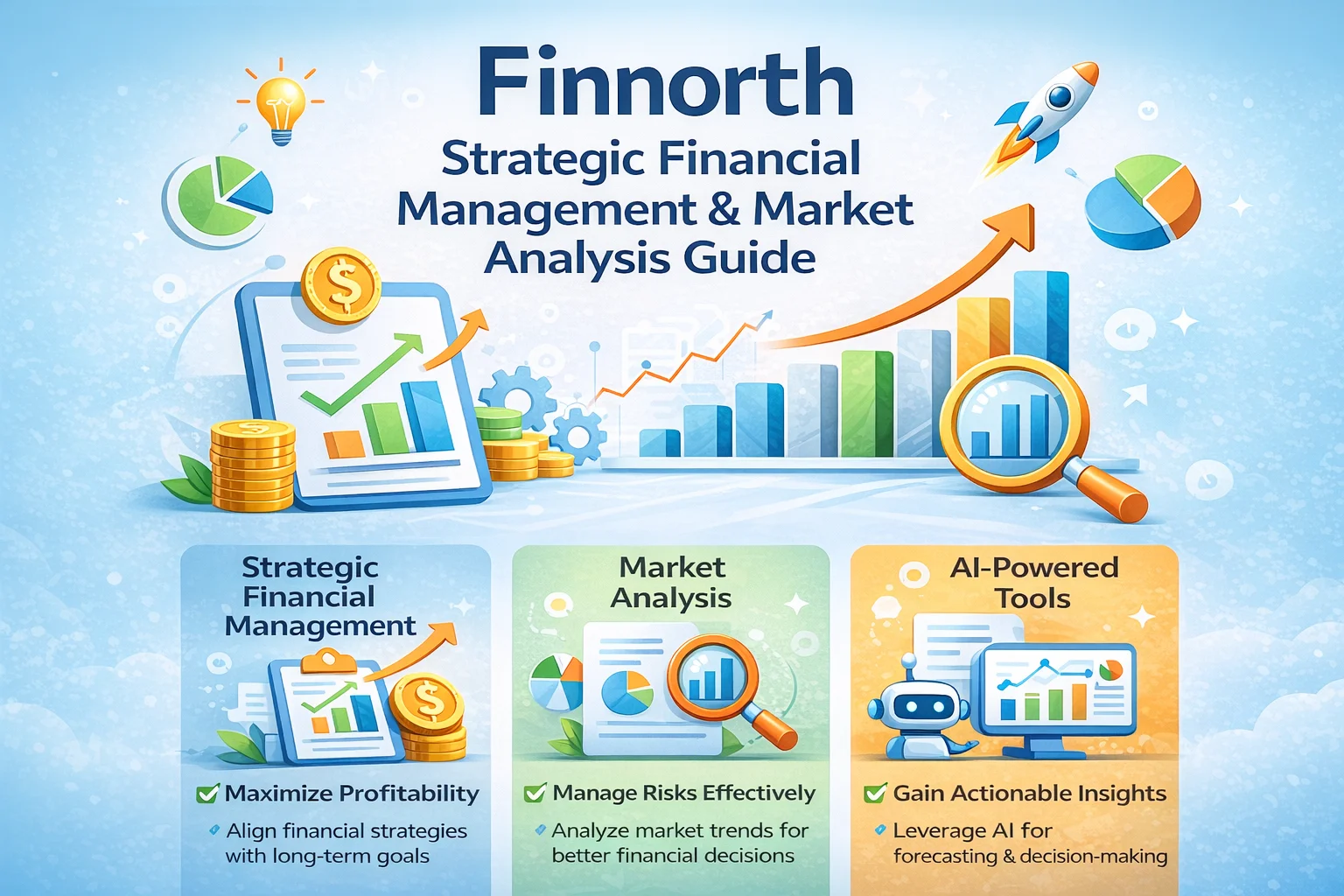
In today’s financial world, businesses face constant change. To thrive, companies must align their financial strategies with long-term objectives while adapting to market shifts. Finnorth’s innovative approach to strategic financial management and market analysis empowers businesses to make data-driven decisions that foster growth, stability, and sustainability.
What is Strategic Financial Management?
Strategic financial management refers to the continuous process of managing a company’s financial resources to achieve its long-term goals and objectives. It involves proactive decision-making around investment, budgeting, capital allocation, and risk management to ensure sustainable growth.
- Key Objectives of Strategic Financial Management:
- Maximizing shareholder value
- Optimizing capital structure
- Long-term financial forecasting
- Minimizing financial risks
Why Market Analysis is Crucial in Financial Management?
Market analysis helps businesses understand the external factors impacting their operations. It informs financial decisions by offering valuable insights into market conditions, trends, and potential risks.
- SWOT Analysis: A tool used to evaluate a company’s internal strengths and weaknesses, as well as external opportunities and threats.
- PESTEL Analysis: Helps businesses assess macro-environmental factors—political, economic, social, technological, environmental, and legal—that could affect financial strategies.
Comparison Table: SWOT vs. PESTEL for Financial Forecasting
| Aspect | SWOT Analysis | PESTEL Analysis |
|---|---|---|
| Focus | Internal factors | External factors |
| Use | Evaluating business position | Predicting market conditions |
| Decision-Making | Strategic planning | Risk assessment |
| Key Strength | Quick, easy to implement | Broad, comprehensive view of external factors |
Key Financial Management Tools for Businesses
Strategic financial management requires a combination of tools and techniques to make informed decisions:
- Financial Ratios:
- ROI (Return on Investment) = (Net Profit / Investment) * 100
- Debt-to-Equity Ratio = Total Liabilities / Shareholder’s Equity
- Liquidity Ratios: Current Ratio = Current Assets / Current Liabilities
- Budgeting & Forecasting: Financial forecasting helps predict revenues and expenditures, while budgeting allocates resources to meet business goals effectively.
- Risk Management: By identifying and managing risks, businesses can minimize potential financial losses.
Leveraging AI in Financial Management
Artificial Intelligence is revolutionizing financial management by providing tools for predictive analytics, which help businesses forecast market trends and financial outcomes more accurately.
- AI-driven Forecasting: Predictive analytics allow for accurate and timely financial forecasting.
- Automation: AI can automate repetitive tasks like data entry and financial report generation, freeing up time for strategic decision-making.
Pro Tip: Incorporating AI tools into financial decision-making leads to more precise forecasts and mitigates human error in budgeting and risk management.
Conclusion
Strategic financial management is essential for any business looking to thrive in today’s ever-evolving market. By combining effective market analysis with cutting-edge financial tools, businesses can make informed decisions that ensure long-term success. Finnorth’s integrated approach to financial strategy and AI-driven insights offers businesses the edge they need to navigate uncertainty and capitalize on emerging opportunities.
The Ultimate Guide to Strategic Financial Management & Market Analysis
Strategic Financial Management is a crucial aspect of business success, helping companies align their financial decisions with long-term goals. It’s not just about maintaining balance sheets but using data to drive sustainable growth. This guide will explore how companies can integrate market analysis with financial management strategies, using advanced tools like AI to remain competitive in an ever-changing market.
Get Information about Inter Miami vs Tigres UANL: Match Timeline, Key Moments & Tactical Deep Dive
What is Strategic Financial Management?
Strategic financial management refers to the process of planning, organizing, directing, and controlling a company’s financial resources to achieve its long-term objectives. This practice ensures that financial decisions align with the company’s strategic goals, from investment choices to budgeting and risk management.
Why Market Analysis is Essential to Financial Success
Market analysis provides businesses with the information they need to make informed financial decisions. By understanding external factors, companies can develop effective strategies that align with market trends and mitigate risks.
- SWOT Analysis: Identifies internal strengths and weaknesses, along with external opportunities and threats, to inform decision-making.
- PESTEL Analysis: Analyzes external factors like political changes, economic shifts, and environmental factors to predict how these affect financial performance.
| Aspect | SWOT Analysis | PESTEL Analysis |
|---|---|---|
| Focus | Internal factors | External factors |
| Primary Use | Strategic positioning | Predicting market conditions |
| Decision-Making | Strategic planning | Risk assessment |
| Key Strength | Simple, fast to use | Comprehensive, broad focus |
Financial Management Tools for Effective Decision-Making
To effectively manage a company’s finances, businesses rely on a combination of financial ratios, tools, and forecasting methods.
- Financial Ratios:
- ROI (Return on Investment) = (Net Profit / Investment) * 100
- How to Calculate: Divide the net profit by the total investment, then multiply by 100 to get the percentage.
- Debt-to-Equity Ratio = Total Liabilities / Shareholder’s Equity
- How to Calculate: Divide total liabilities by the shareholder’s equity to assess financial leverage.
- Liquidity Ratios: Current Ratio = Current Assets / Current Liabilities
- How to Calculate: Divide the current assets by current liabilities to determine a company’s ability to meet short-term obligations.
- ROI (Return on Investment) = (Net Profit / Investment) * 100
- Budgeting & Forecasting: Budgeting is crucial for planning financial resources effectively, while forecasting helps predict future financial outcomes based on historical data.
- Risk Management: Financial risks can be minimized by employing strategies like diversification, insurance, and hedging.
AI and Predictive Analytics in Financial Management
AI and machine learning are transforming the landscape of financial management. With predictive analytics, businesses can forecast financial trends and market movements, enabling them to make better decisions faster.
- Optimizing Financial Forecasting: AI tools analyze historical data and provide accurate predictions about revenue, expenses, and market trends.
- Automation for Efficiency: AI can automate time-consuming tasks like financial reporting and budgeting, freeing up valuable resources for strategic decisions.
Pro Tip: Using AI for financial forecasting enhances the accuracy and efficiency of budgeting, providing businesses with a competitive advantage in a fast-paced market.
Real-Life Case Studies: Finnorth’s Success Stories
Finnorth has helped various businesses streamline their financial management processes. For example, a tech startup increased its ROI by 20% by integrating Finnorth’s AI-driven predictive analytics into their financial strategy, allowing them to make smarter investment choices.
Conclusion
Strategic financial management and market analysis are two sides of the same coin. By integrating these practices and leveraging AI-driven tools, businesses can make informed decisions that ensure long-term growth and profitability. Finnorth’s approach combines the best of both worlds, offering businesses the tools and insights they need to stay competitive and future-proof their financial strategies.