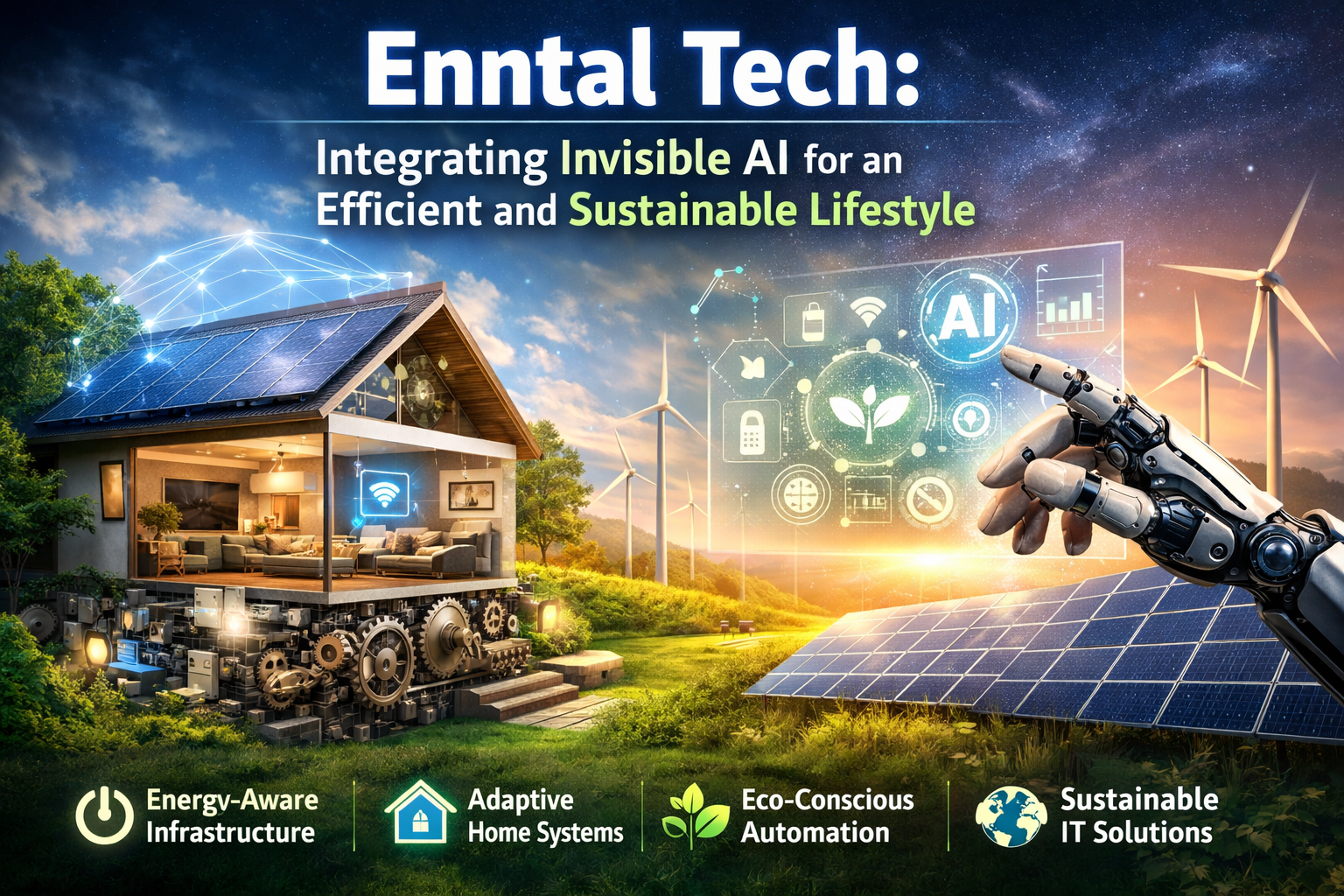
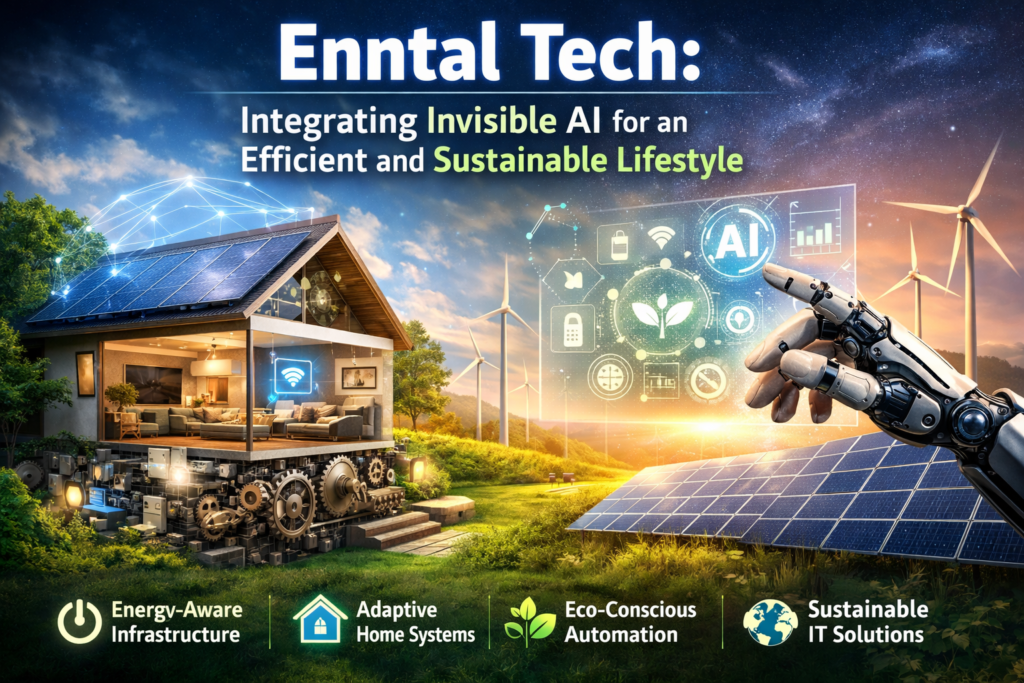
Enntal Tech: Integrating Invisible AI for an Efficient and Sustainable Lifestyle
In the age of rapid technological advancement, the concept of a sustainable lifestyle has grown from a mere aspiration to a practical reality. As societies become more aware of the pressing need to reduce their carbon footprint and optimize energy use, Enntal Tech has emerged as a cutting-edge solution for integrating Invisible AI to foster a more efficient and sustainable lifestyle.
At its core, Enntal Tech aims to harness AI in the background — invisibly working behind the scenes to create smarter infrastructures, homes, and systems that are energy-efficient, adaptable, and environmentally conscious. In this article, we explore how Energy-aware Infrastructure, Smart Materials, Adaptive Home Systems, Eco-conscious Automation, and Sustainable-by-design IT are working together through Enntal Tech to reshape how we live and interact with the world.
The Evolution of Enntal Tech: Where Sustainability Meets Innovation
The word “Enntal” refers to the harmonious blend of energy and sustainability — a vision where every technological advancement serves the dual purpose of improving efficiency while minimizing environmental impact. By integrating Invisible AI into everyday life, Enntal Tech has pioneered a way to make sustainable living seamless and almost imperceptible to users.
Invisible AI refers to the artificial intelligence embedded in various systems and technologies without the need for direct human interaction or visible interfaces. It learns from the environment and adapts to meet energy needs efficiently, creating a smoother, smarter living experience. This technology helps optimize energy consumption, reduce waste, and create systems that are more adaptive and environmentally friendly.
As we venture further into the world of Invisible AI and Enntal Tech, we are introduced to concepts such as Energy-aware Infrastructure, Smart Materials, and Adaptive Home Systems. These are the pillars that support the next generation of eco-conscious innovation.
Old vs. New: A Comparison of Energy Efficiency
Understanding the difference between traditional energy systems and the next-generation Enntal Tech systems can provide deeper insight into why Invisible AI is the future. Here’s a comparison table showcasing how old and new systems differ when it comes to efficiency, adaptability, and sustainability.
| Feature | Old Energy Systems | Enntal Tech (New Systems) |
|---|---|---|
| Energy Efficiency | High energy waste due to inefficient appliances, lighting, and HVAC systems. | Predictive climate control and AI-driven appliances reduce energy waste by up to 30%. |
| Adaptability | Static and manual adjustments (e.g., adjusting the thermostat). | Adaptive systems that respond automatically to changes in occupancy and weather. |
| Automation | Limited automation, requiring manual intervention for energy management. | Invisible AI enables eco-conscious automation, optimizing energy use without user input. |
| Material Sustainability | Conventional materials with higher environmental impact. | Smart materials such as thermochromic glass, self-healing concrete, and phase-change materials reduce energy demand and resource use. |
| Predictive Energy Management | Based on human inputs and static schedules. | AI-driven predictive systems that optimize energy use, reducing waste in real time. |
| Carbon Footprint | Higher due to energy inefficiencies. | Significant reduction in carbon emissions through efficient energy systems. |
| Maintenance and Repairs | Frequent maintenance required for inefficient systems. | Smart materials and self-healing systems reduce the need for maintenance and repairs. |
Energy-Aware Infrastructure: A Step Toward Smart Cities
Energy-aware infrastructure is the backbone of smart cities, where buildings, streets, and even entire urban landscapes are optimized to use energy efficiently. In a traditional city, energy usage is relatively static and disconnected from its environment. However, energy-aware infrastructure integrates Invisible AI to monitor and adjust energy flow in real-time, allowing for a more sustainable and responsive system.
For example, energy-aware buildings use sensors and AI algorithms to detect when energy consumption is higher than necessary. The system might adjust the lighting, heating, or cooling to optimize energy use. In smart cities, this could extend to streetlights that adjust their brightness based on pedestrian movement or traffic flow, reducing unnecessary energy usage during off-peak hours.
This is where AI plays a critical role. By analyzing historical data and real-time information, energy-aware systems can predict energy consumption patterns and make adjustments to optimize both performance and environmental impact. For example, smart grids powered by AI can balance energy loads more efficiently, incorporating renewable sources like solar or wind energy into the grid more effectively.
As energy-aware infrastructure becomes more ubiquitous, cities will be able to adapt to changing environmental conditions while minimizing waste and maximizing energy savings. This infrastructure can lead to long-term sustainability in both urban planning and energy management.
Smart Materials: The Future of Sustainable Building Materials
One of the most exciting advancements in Enntal Tech is the development of smart materials that adjust their properties in response to external conditions. These materials not only play a critical role in the construction of energy-efficient buildings but also significantly reduce environmental impact.
Smart materials are a class of materials that can change their characteristics in real-time based on their environment. This could include things like self-healing concrete, which can repair small cracks and prevent further deterioration, or thermochromic glass that adjusts its opacity based on sunlight, reducing the need for air conditioning.
These adaptive materials also contribute to energy-aware infrastructure by helping buildings and structures manage their energy consumption. Smart windows can regulate light and heat, improving insulation and reducing the need for artificial lighting or temperature control. Similarly, phase-change materials in buildings absorb heat during the day and release it at night, reducing the need for heating and cooling systems.
By incorporating smart materials into the design and construction of homes and buildings, we can create structures that are not only energy-efficient but also eco-friendly by reducing the use of traditional resources like non-renewable materials and energy-hungry systems. get Informtion about Veneajelu!
Adaptive Home Systems: Personalizing Sustainability
Imagine a home where everything from temperature control to lighting, water usage, and energy consumption is automatically adjusted based on your preferences and habits. This is the reality created by adaptive home systems that integrate Invisible AI into the daily functioning of a house.
An adaptive home system collects data from various sensors throughout the home to create a living environment that adjusts itself in real-time. For instance, a smart thermostat might adjust the temperature based on the time of day, occupancy, and even the weather forecast, ensuring that energy is not wasted when the house is empty or during cooler hours.
These systems go beyond simple automation. Invisible AI within these home systems analyzes patterns in energy use, light, and occupancy to make sustainable decisions that would otherwise require manual input. For example, AI may decide to turn off lights in an unoccupied room, close blinds to regulate indoor temperature, or adjust water flow based on the number of people using the shower.
As adaptive systems continue to evolve, we can expect even more sophisticated eco-conscious automation. These systems will understand the habits of their inhabitants and adjust to optimize both comfort and sustainability, creating an environment that actively contributes to reducing energy consumption and carbon emissions.
Eco-Conscious Automation: The Heart of Sustainability
At the heart of Enntal Tech is eco-conscious automation, which refers to the use of AI to automate processes that minimize environmental impact while improving efficiency. Invisible AI makes this possible by enabling systems to make autonomous decisions based on data analysis and real-time feedback.
For example, in a smart home, eco-conscious automation can extend beyond simple energy management. Smart irrigation systems use weather forecasts and real-time moisture data to adjust water usage, ensuring that gardens and lawns are only watered when necessary. Home appliances like refrigerators and washing machines can also adjust their energy use, operating at the most energy-efficient times and settings.
On a larger scale, eco-conscious automation is revolutionizing industries such as manufacturing, where AI systems control energy use, waste management, and production efficiency. AI-powered waste-sorting systems can optimize recycling processes by automatically sorting waste based on material type, reducing contamination and improving the recycling process.
By integrating eco-conscious automation into all aspects of life, from personal homes to global industries, Enntal Tech enables a more sustainable future where every action contributes to energy conservation, waste reduction, and a greener planet.
Sustainable-by-Design IT: Building Green Technologies for a Greener Future
Sustainability is not just about reducing energy consumption — it’s also about building systems that are inherently sustainable from the start. Sustainable-by-design IT focuses on creating technologies that are environmentally friendly both in terms of their operational energy use and their manufacturing processes.
One of the core principles of sustainable IT is the creation of low-energy-consuming devices. This includes energy-efficient data centers, green computing, and low-power hardware. By designing systems that use minimal resources and power, IT solutions can reduce their overall environmental impact.
Furthermore, sustainable-by-design IT encourages the use of renewable energy sources in the operation of tech infrastructure, such as data centers powered by wind or solar energy. It also includes the use of recyclable materials in hardware, reducing the environmental footprint of manufacturing.
For smart cities and industries, adopting sustainable IT practices ensures that the technological backbone of these systems supports not just efficiency but environmental sustainability as well. By integrating AI with sustainable IT, companies can build systems that automatically manage energy consumption, making smart decisions about when and how to use power without human intervention. learn about Alexanote!
Research-Backed Insights
Research in Enntal-based systems suggests that invisible AI can reduce household energy waste by up to 30% through predictive climate control. This finding highlights the significant potential of AI in minimizing energy consumption and promoting eco-conscious automation in daily living.
Moreover, a recent study from the Institute of Sustainable Technologies found that adaptive home systems can decrease energy waste by nearly 25% when optimized for occupancy patterns and external climate conditions.
Semantic FAQ Section
Q1: How does Invisible AI contribute to energy efficiency in homes?
Ans: Invisible AI optimizes energy consumption by analyzing patterns in real-time, automatically adjusting temperature, lighting, and appliance usage based on occupancy and external conditions.
Q2: What are Smart Materials, and how do they help reduce energy consumption?
Ans: Smart materials are substances that can change their properties in response to environmental conditions. For example, thermochromic glass adjusts its opacity based on sunlight, reducing the need for air conditioning.
Q3: What is eco-conscious automation?
Ans: Eco-conscious automation involves using AI to manage energy and resource consumption in a sustainable way, such as optimizing water usage in irrigation systems or controlling energy-efficient appliances.