
Aviation Safety Guide 2026: How to Stay Informed and Fly Without Fear
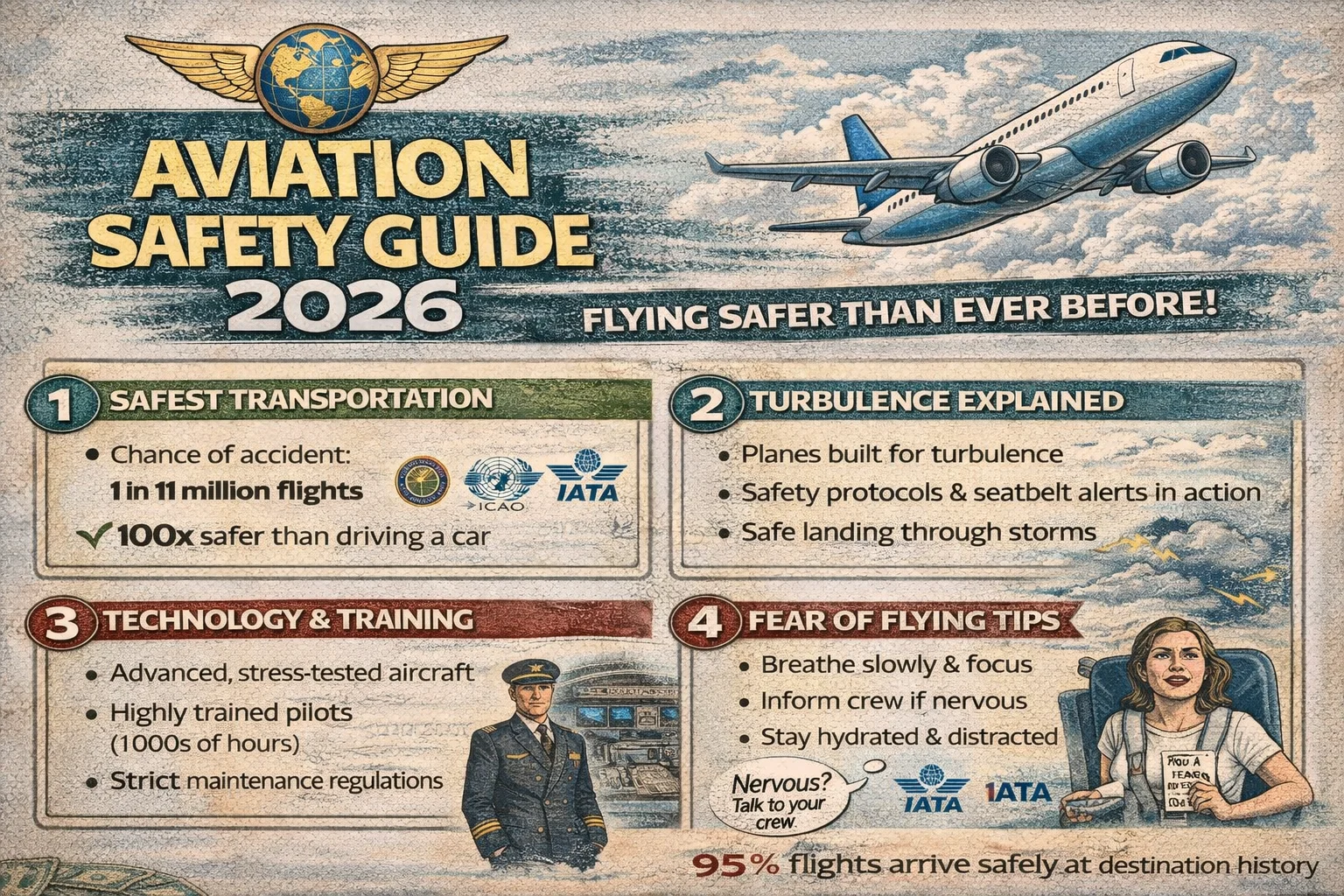
Air travel remains one of the safest modes of transportation in 2026, yet many travelers still feel anxious before boarding a plane.
News headlines about plane incidents can increase fear, even though statistically flying is safer than driving. So how safe is aviation today, and how can you stay informed without becoming overwhelmed?
This complete aviation safety guide will help you:
- Understand how safe flying really is
- Learn how to verify aviation news
- Track flight safety updates
- Manage fear of flying
- Stay calm during turbulence
Let’s break it down clearly and practically.
Is Flying Safe in 2026?
Quick Answer:
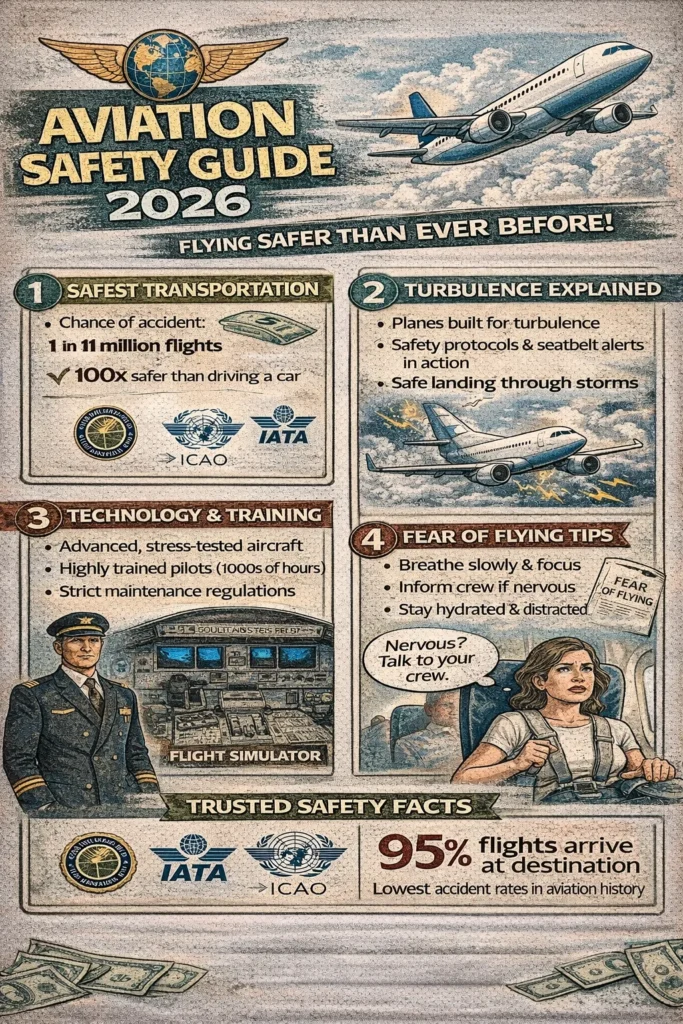
Yes, commercial aviation remains extremely safe due to strict regulations, pilot training, and advanced aircraft technology.
Modern aviation benefits from:
- Advanced radar systems
- Real-time weather tracking
- Predictive aircraft maintenance
- Strict international safety standards
- Highly trained pilots and crew
Aviation authorities continuously monitor safety performance worldwide.
Why Plane Crashes Feel More Common Than They Are?
The reason many people feel flying is risky is psychological.
1️⃣ Media Amplification
When a plane incident occurs:
- It becomes global news
- It trends on social media
- It receives repeated coverage
Car accidents, on the other hand, happen daily but rarely receive global headlines.
2️⃣ Lack of Control
Passengers feel:
- No control over aircraft
- Fear of heights
- Fear of mechanical failure
This lack of control increases anxiety.
3️⃣ Availability Bias
When you see repeated news stories, your brain assumes events are frequent — even when they are statistically rare.
How Aviation Safety Is Maintained in 2026?
✔ Strict Pilot Training
Pilots undergo:
- Simulator emergency training
- Recurrent certification checks
- Medical examinations
- Fatigue monitoring
They train for worst-case scenarios regularly.
✔ Aircraft Maintenance Systems
Modern aircraft use:
- Predictive maintenance software
- Real-time engine monitoring
- Redundant backup systems
Planes are designed with multiple fail-safes.
✔ Global Aviation Authorities
Major authorities include:
- Federal Aviation Administration (FAA)
- European Union Aviation Safety Agency (EASA)
- International Civil Aviation Organization (ICAO)
These organizations enforce global safety standards.
How to Stay Informed Before Your Flight?
Instead of relying on viral posts, use official sources.
1️⃣ Check Airline Notifications
Airlines provide:
- Real-time delay updates
- Gate changes
- Weather advisories
Always enable app notifications.
2️⃣ Use Flight Tracking Tools
Flight tracking apps show:
- Aircraft route
- Weather conditions
- Estimated arrival time
This transparency reduces uncertainty.
3️⃣ Monitor Weather Reports
Weather is the most common cause of delays, not mechanical failure.
Checking weather reduces surprise anxiety.
Understanding Turbulence
Turbulence is one of the biggest fear triggers.
What Causes Turbulence?
- Air pressure changes
- Jet streams
- Weather systems
- Mountain waves
Important Fact:
Aircraft are built to withstand turbulence far stronger than what passengers typically experience. Getting more Information about Gateway Pundit: The Complete Guide to America’s Controversial Conservative News Outlet.
Pilots are trained to:
- Navigate around severe storms
- Adjust altitude
- Reduce impact
Turbulence is uncomfortable — not unsafe.
What to Do During Turbulence?
✔ Keep seatbelt fastened
✔ Stay seated
✔ Avoid panic reactions
✔ Follow crew instructions
The safest place during turbulence is in your seat with your belt secured.
Practical Tips to Reduce Fear of Flying
1️⃣ Choose Morning Flights
Morning flights often experience smoother air due to stable weather conditions.
2️⃣ Sit Near the Wings
Seats near the wings feel less movement compared to back seats.
3️⃣ Practice Breathing Techniques
Try:
- 4-4-6 breathing (inhale 4, hold 4, exhale 6)
- Slow controlled breathing
This reduces heart rate and panic response.
4️⃣ Avoid Excessive News Before Flying
Constant exposure to aviation incident news increases anxiety unnecessarily.
Stick to official sources only.
Comparing Flying vs Driving Risk
Statistically:
- Driving has significantly higher accident rates
- Aviation has layered safety systems
- Commercial airlines operate under strict global regulations
Flying remains one of the safest forms of travel.
How Aircraft Safety Technology Has Improved?
Modern planes now use:
- Collision avoidance systems
- Enhanced weather radar
- Automatic landing technology
- Terrain awareness systems
These systems reduce human error significantly.
When to Seek Help for Severe Flight Anxiety?
If fear becomes overwhelming:
- Consider cognitive behavioral therapy
- Attend fear-of-flying programs
- Speak with a medical professional
Many airlines also offer educational programs.
How to Verify Aviation News in 2026?
Before sharing or reacting:
✔ Check official aviation authority websites
✔ Look for multiple verified sources
✔ Avoid unconfirmed social media posts
✔ Understand investigation timelines
Investigations can take months. Early reports may be incomplete.
Frequently Asking Questions
Q1. Is flying safer than driving?
Ans. Yes. Statistically, commercial aviation is safer than road travel.
Q2. Is flying safer than driving?
What causes turbulence?
Ans. Air pressure shifts, jet streams, and weather systems.
Q3. Is flying safer than driving?
Should I worry about turbulence?
Ans. No. Aircraft are built to handle turbulence safely.
Q4. Is flying safer than driving?
How can I reduce fear before flying?
Ans. Choose morning flights, sit near wings, practice breathing, and rely on official updates.
Final Thoughts
In 2026, aviation safety remains stronger than ever. Strict training, advanced aircraft technology, and global regulatory oversight make flying statistically safe.
Fear often comes from:
- Media amplification
- Lack of control
- Psychological bias
By staying informed through official sources and understanding how aviation safety works, you can fly with confidence, not fear.