Marketing Fundamentals 101: Learn the Basics, Build Your Brand, Boost Sales
Marketing is the backbone of every successful business. Whether you’re a startup founder, a small business owner, or an aspiring marketer, understanding the fundamentals of marketing is critical to building a strong brand and boosting sales. In this guide, we’ll cover everything from the basics of marketing principles to modern strategies, tools, case studies, including Indian examples, and actionable tips you can start using today.
Introduction: Why Marketing Fundamentals Matter
Marketing is much more than just advertising your products or services. It’s about understanding your customers, creating value, and building relationships. A strong foundation in marketing fundamentals allows you to:
- Communicate your brand effectively
- Identify opportunities for growth
- Make informed decisions about marketing spend
- Build customer trust and loyalty
Whether you’re just starting your business journey or aiming to improve your marketing skills, this guide will give you actionable insights to get started.
What Are Marketing Fundamentals?
Marketing fundamentals are the core principles and strategies that guide all marketing activities. They form the foundation for creating, promoting, and delivering value to your customers. Key points include:
- Strategy vs Tactics: Strategy is the big-picture plan (e.g., building brand awareness), while tactics are the specific actions (e.g., running an Instagram campaign).
- Customer-Centric Approach: Every marketing decision should consider the needs and desires of your target audience.
- Real-World Examples: Even small local businesses use marketing fundamentals—like consistent branding, pricing strategy, and promotions to attract customers and increase sales.
Understanding these basics ensures that every campaign, online or offline, aligns with your business goals.
Core Principles of Marketing
Marketing is built on several core principles. Modern marketing frameworks combine traditional methods with customer-focused approaches to ensure relevance and efficiency.
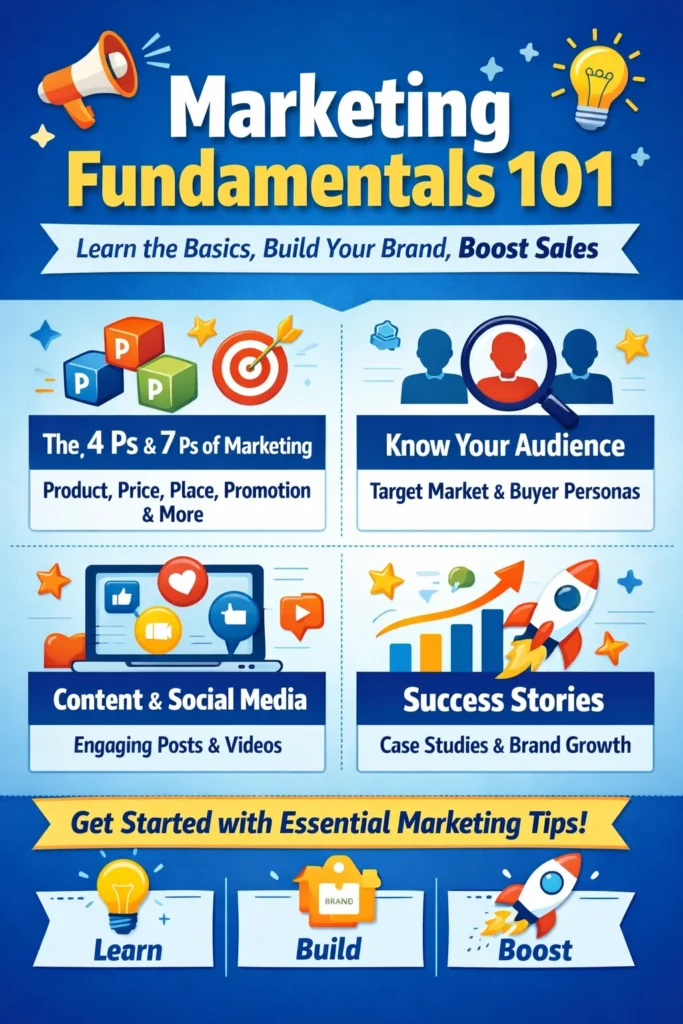
The 4 Ps, 7 Ps, and 4 Cs of Marketing
Traditional 4 Ps:
- Product: What are you offering, and how does it solve a customer problem?
- Price: How much will it cost, and what is its perceived value?
- Place: Where and how will the product reach customers?
- Promotion: How will you communicate its benefits to your audience?
Extended 7 Ps (Modern Marketing):
- People: Employees, customer service, and interactions
- Process: How your services/products are delivered
- Physical Evidence: Tangible proof of quality, packaging, and store appearance
Customer-Focused 4 Cs:
- Customer: Understand customer needs, not just product features
- Cost: Consider total cost to the customer
- Convenience: Make access and purchasing easy
- Communication: Two-way engagement with your audience
Tip: Modern businesses often blend these frameworks to create holistic marketing strategies.
Understanding Your Target Audience
Knowing your audience is the key to successful marketing. Consider:
- Demographics: Age, gender, location, income level
- Psychographics: Interests, lifestyle, values
- Buyer Personas: Fictional representations of ideal customers
Example: If you’re selling eco-friendly skincare in India, your audience may include urban millennials aged 20–35, interested in sustainability and wellness.
Branding Basics
Your brand is more than a logo, it’s the perception customers have of your business. Strong branding involves:
- Consistency: Across social media, packaging, and communication.
- Emotional Connection: Relate to customer values and aspirations.
- Unique Value Proposition (UVP): Why choose your product over competitors?
Marketing Channels Overview
Digital Channels:
- Social media marketing (Instagram, Facebook, X, LinkedIn)
- Search engine optimization (SEO)
- Email marketing
- Pay-per-click (PPC) ads
Offline Channels:
- Events and activations
- Print ads
- Direct marketing
Tip: Most small businesses today focus heavily on digital channels, but offline marketing still plays a crucial role in certain regions. Read more on disco cowboy hat.
Marketing Strategies for Beginners
Creating an actionable strategy doesn’t need to be complicated. Here’s how beginners can get started.
Basic Marketing Plan & SMART Goals
- Define clear objectives: awareness, engagement, leads, or sales.
- Use SMART goals: Specific, Measurable, Achievable, Relevant, Time-bound.
- Allocate a budget for campaigns and tools.
Content Marketing Strategy
- Create valuable content that educates or entertains your audience.
- Types: Blogs, videos, guides, social posts.
- Benefits: Builds trust, improves SEO, and drives traffic.
Social Media Strategy
- Select platforms where your audience spends time.
- Maintain posting frequency and consistent messaging.
- Engage with followers via comments, polls, and stories.
- Use analytics to measure performance and optimise campaigns.
Small-Scale Campaign Examples
- Email newsletters for local customers.
- Discounts or referral campaigns.
- Collaborations with micro-influencers.
Common Marketing Mistakes to Avoid
- Ignoring the target audience
- Focusing only on short-term sales instead of brand awareness
- Neglecting analytics and campaign performance data
- Inconsistent messaging across channels
Avoiding these mistakes saves time, money, and ensures better ROI.
Tools & Resources for Learning Marketing Fundamentals
Free Tools
- Canva: Easy graphic design for social media & content
- Google Analytics: Track website traffic, user behavior, and campaign performance
Paid Tools
- Mailchimp Premium: Email marketing automation
- SEMrush: SEO research, competitor analysis, and keyword tracking
Learning Platforms
- Coursera: Free and paid marketing courses
- YouTube: Tutorials, case studies, and expert insights
- HubSpot Academy: Free certifications on inbound marketing
Case Studies: Marketing Fundamentals in Action
International Example: A small startup leveraged content marketing and social media ads to grow brand awareness and boost sales within six months.
Indian Examples:
- Mamaearth: Built brand trust through eco-friendly storytelling and social media campaigns targeting urban millennials
- Boat: Used influencer marketing and content campaigns to dominate the audio gadgets market
- Phool.co: Focused on sustainability and storytelling to attract conscious consumers
These case studies show practical application of marketing fundamentals in both global and Indian contexts.
Measuring Your Marketing Success
Tracking your results is essential. Focus on:
- Key Metrics: ROI, engagement, traffic, conversion rate
- Analytics Dashboards: Tools like Google Analytics and social media insights
- Iterate Strategies: Adjust campaigns based on what works
Tip: For beginners, even simple spreadsheets can help monitor campaigns.
FAQs: Common Marketing Questions
Q1. What is the difference between marketing and advertising?
Ans. Marketing is a holistic strategy; advertising is one tactic within marketing.
Q2. How much should I spend on marketing as a startup?
Ans. Start with 5–10% of projected revenue and scale as results improve.
Q3. Can I learn marketing fundamentals without a degree?
Ans. Yes! Online courses, free tools, and practical experience are sufficient.
Q4. How long does it take to see results from marketing?
Ans. Depends on strategy and platform; content marketing may take 3–6 months for measurable impact.
Q5. Digital Marketing vs Traditional Marketing: Which is better for beginners?
Ans. Digital marketing is cost-effective and measurable, making it ideal for startups and beginners.
Conclusion
Marketing fundamentals are the foundation for business growth, brand building, and sales success. Whether you use the 4 Ps, 7 Ps, or 4 Cs framework, the key is to understand your audience, build strong branding, and implement consistent strategies.
Start small, measure your efforts, and gradually expand your campaigns. By applying these fundamentals, you can confidently grow your brand and see measurable results.